Welcome to the Onshape forum! Ask questions and join in the discussions about everything Onshape.
First time visiting? Here are some places to start:- Looking for a certain topic? Check out the categories filter or use Search (upper right).
- Need support? Ask a question to our Community Support category.
- Please submit support tickets for bugs but you can request improvements in the Product Feedback category.
- Be respectful, on topic and if you see a problem, Flag it.
If you would like to contact our Community Manager personally, feel free to send a private message or an email.
Best Of
Re: Patterns along a series of surfaces
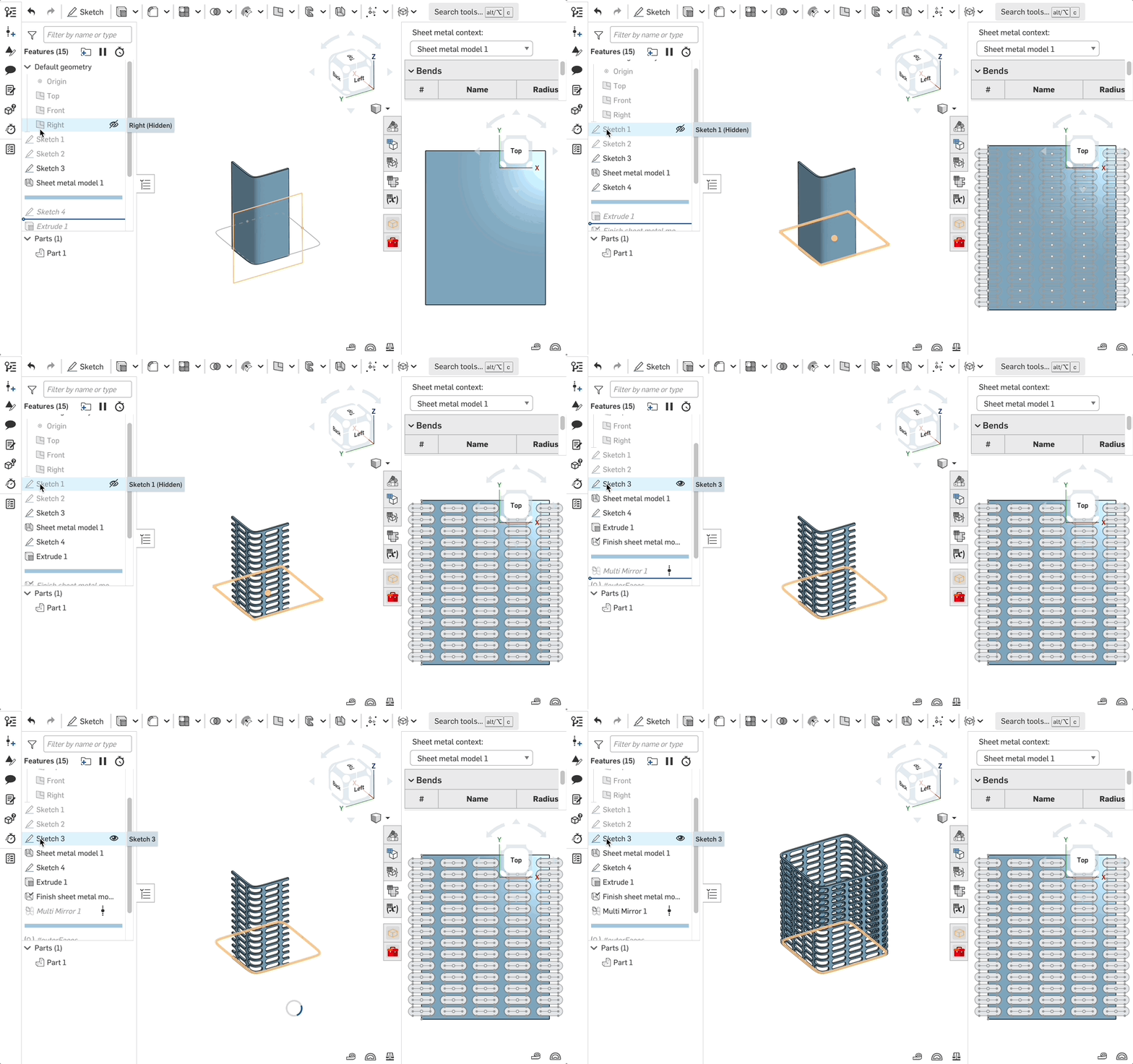
This is where I'd use the sheet metal tools to create some geometry to work with and go from there. This example isn't a perfect match, but in your case your sheet metal will probably end up being a tool body you cut with instead of something you add. I think the concept still works.

Re: Willing but a bit clueless
What you should be looking to learn in the learning center that Ste_Wilson posted is…
- creating a part studio
- creating a sketch —- skip steps 3-4 if taking dimensions directly from part
- importing an image and getting is scaled to the right size (it will never be perfect due to camera paralax distortion)
- creating a second sketch
- drawing and constraining the sketch entities needed for an extrusion
- extruding the sketch region
- adding additional features via extrudes, revolves, fillets etc. — whatever you need to get to the finish line.
 MDesign
Re: Improvements to Onshape - September 19th, 2025
This is what I'm talking about. Outside dimensions of pipe diameters have always been the controlled dimension since the Briggs system standardized things in the early industrial revolution, and pipes of different schedules in the same nominal dimension all have the same OD with the wall thickness resulting in a different ID. The nominal designation was derived from an era where every shop had their own forging dies and practices with varying dimensions from shop to shop and batch to batch even from the same shop. Even back then the outer dimension was the controlled feature for the production process. The NPS sizes just happen to be the die dimensions that one shop was using as an internal standard and published as a compatibility thing for other shops to use during the Civil War.
This being the case, when someone grabs a tape measure and checks the inside of some unknown stock that might be pipe or might be tube I die a little inside.
